Episode
Mand Modality Preference Assessments
Guest:
Published:
Duration:
CEU eligible:
CEU type:
Episode
Mand Modality Preference Assessments
Guest:
Published:
Duration:
CEU eligible:
CEU type:
Cooperant Learning Podcast | Mand Modality Preference Assessments | Cynthia Livingston and Alexandra Cicero
CEUs
Cooperant Learning is a project of Sparks Behavioral Services, LLC (ACE #OP-21-0004), an ACE-approved provider of continuing education units for behavior analysts. You can earn continuing education units (CEUs) for listening to episodes by visiting cooperantlearning.com!
Summary
In this episode, Dr. Cynthia Livingston and Alexandra Cicero help us explore Mand Modality Preference Assessments (MMPAs) in the context of functional communication training. We get into the definition and application of MMPAs, the research behind caregiver versus child preferences, and the implications of autonomy and self-determination in communication. The guests share insights from their research, discuss the challenges of implementing these assessments, and highlight future research directions of their lab in the field of behavior analysis.
Guests
Cynthia Livingston, PhD, BCBA-D, is an Assistant Professor and board-certified behavior analyst in the Specialized Behavior Intervention Department (formerly, Severe Behavior Department) at the University of Nebraska Medical Center’s Munroe-Meyer Institute. Dr. Livingston’s clinical and research work focuses on the assessment and treatment of severe, challenging behavior using the scientist–practitioner model. Her research emphasizes the application of functional analysis to inform individualized intervention, with a particular interest in optimizing functional communication training (FCT). Within this line of work, she examines mand modality preference assessments (MMPAs) to better understand how response form, effort, and individual preference influence treatment outcomes, efficiency, and durability within the context of FCT. Her goal is to enhance the precision and social validity of behavioral interventions by integrating empirical rigor with client-centered decision making.
At MMI, Dr. Livingston serves as a case manager across day treatment, intensive outpatient, and follow-up clinics, providing evidence-based assessment and intervention for children with severe problem behavior. She works closely with interdisciplinary teams and caregivers to translate behavioral science into practical, sustainable strategies that promote challenging behavior reduction, skill acquisition, and long-term quality of life.
Dr. Livingston is deeply committed to mentorship and training the next generation of behavior analysts. She views mentorship as an extension of the scientist–practitioner model—teaching students not only how to implement evidence-based procedures, but how to think analytically, evaluate data critically, and adapt interventions thoughtfully in complex clinical contexts. Outside of her professional work, she enjoys yoga, discovering new Trader Joe’s snacks, and maintaining a respectable bedtime.
Alexandra Cicero is a Board Certified Behavior Analyst currently working in the Specialized Behavior Intervention Department (formerly Severe Behavior Department) at the Munroe-Meyer Institute, University of Nebraska Medical Center. She specializes in assessing and treating challenging behavior in individuals diagnosed with autism and other developmental disabilities. Her clinical and research interests include functional communication training (FCT), caregiver training, and mand modality preference. Alexandra is passionate about creating meaningful, individualized treatment plans and collaborating closely with families to promote long-term success across settings. She also enjoys teaching and mentoring future behavior analysts and values creating inclusive, supportive learning environments.

Evaluation of a Sequential Extinction Procedure on Preference for Communication Modalities During Functional Communication Training
Comparison of Mand Acquisition and Preference in Children with Autism who Exhibit Problem Behavior
Comparison of Caregivers’ and Children’s Preference for Mand Topography During Functional Communication Training
Earn Your CEU
Your certificate appears in your Dashboard after completion.
Price :
$9
Take the Quiz
Go to the episode connected course – Buy – Take the quiz
or
Add to cart
Add to cart – Buy later – With one or more items
Add CEU to the cart – Pay – Take the quiz – Get certificate
Price :
$9
Earn Your CEU
View certificates in Dashboard after completion.
Take the Quiz
Go to the episode connected course – Buy – Take the quiz
or
Add to cart
Add to cart – Buy later – With one or more items
Add CEU to the cart – Pay – Take the quiz – Get certificate
Cooperant Learning Podcast | Mand Modality Preference Assessments | Cynthia Livingston and Alexandra Cicero
CEUs
Cooperant Learning is a project of Sparks Behavioral Services, LLC (ACE #OP-21-0004), an ACE-approved provider of continuing education units for behavior analysts. You can earn continuing education units (CEUs) for listening to episodes by visiting cooperantlearning.com!
Summary
In this episode, Dr. Cynthia Livingston and Alexandra Cicero help us explore Mand Modality Preference Assessments (MMPAs) in the context of functional communication training. We get into the definition and application of MMPAs, the research behind caregiver versus child preferences, and the implications of autonomy and self-determination in communication. The guests share insights from their research, discuss the challenges of implementing these assessments, and highlight future research directions of their lab in the field of behavior analysis.
Guests
Cynthia Livingston, PhD, BCBA-D, is an Assistant Professor and board-certified behavior analyst in the Specialized Behavior Intervention Department (formerly, Severe Behavior Department) at the University of Nebraska Medical Center’s Munroe-Meyer Institute. Dr. Livingston’s clinical and research work focuses on the assessment and treatment of severe, challenging behavior using the scientist–practitioner model. Her research emphasizes the application of functional analysis to inform individualized intervention, with a particular interest in optimizing functional communication training (FCT). Within this line of work, she examines mand modality preference assessments (MMPAs) to better understand how response form, effort, and individual preference influence treatment outcomes, efficiency, and durability within the context of FCT. Her goal is to enhance the precision and social validity of behavioral interventions by integrating empirical rigor with client-centered decision making.
At MMI, Dr. Livingston serves as a case manager across day treatment, intensive outpatient, and follow-up clinics, providing evidence-based assessment and intervention for children with severe problem behavior. She works closely with interdisciplinary teams and caregivers to translate behavioral science into practical, sustainable strategies that promote challenging behavior reduction, skill acquisition, and long-term quality of life.
Dr. Livingston is deeply committed to mentorship and training the next generation of behavior analysts. She views mentorship as an extension of the scientist–practitioner model—teaching students not only how to implement evidence-based procedures, but how to think analytically, evaluate data critically, and adapt interventions thoughtfully in complex clinical contexts. Outside of her professional work, she enjoys yoga, discovering new Trader Joe’s snacks, and maintaining a respectable bedtime.
Alexandra Cicero is a Board Certified Behavior Analyst currently working in the Specialized Behavior Intervention Department (formerly Severe Behavior Department) at the Munroe-Meyer Institute, University of Nebraska Medical Center. She specializes in assessing and treating challenging behavior in individuals diagnosed with autism and other developmental disabilities. Her clinical and research interests include functional communication training (FCT), caregiver training, and mand modality preference. Alexandra is passionate about creating meaningful, individualized treatment plans and collaborating closely with families to promote long-term success across settings. She also enjoys teaching and mentoring future behavior analysts and values creating inclusive, supportive learning environments.
Evaluation of a Sequential Extinction Procedure on Preference for Communication Modalities During Functional Communication Training
Comparison of Mand Acquisition and Preference in Children with Autism who Exhibit Problem Behavior
Comparison of Caregivers’ and Children’s Preference for Mand Topography During Functional Communication Training
Learning Objectives
- Participants will describe components of a mand modality preference assessment
- Participants will explain how extinction procedures were systematically applied to establish a functional communication response (FCR) preference hierarchy
- Participants will evaluate the implications of FCR modality preference for autonomy, assent, and social validity, including how to navigate discrepancies between client and caregiver preferences in clinical decision-making
Categories:
Learning Objectives
- Participants will describe components of a mand modality preference assessment
- Participants will explain how extinction procedures were systematically applied to establish a functional communication response (FCR) preference hierarchy
- Participants will evaluate the implications of FCR modality preference for autonomy, assent, and social validity, including how to navigate discrepancies between client and caregiver preferences in clinical decision-making
Categories:
Related Episodes
Supporting Student Transition from School to Employment
CEU :
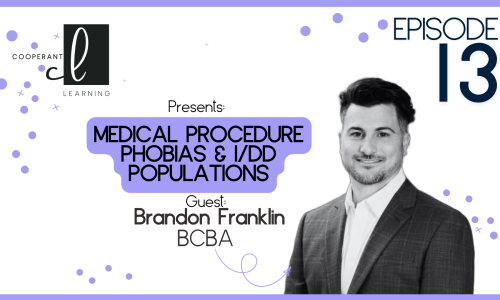
Medical Procedure Phobias & I/DD Populations | Brandon Franklin
CEU :
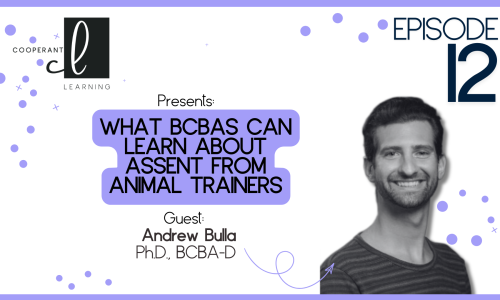
What BCBAs can Learn about Assent from Animal Trainers | Andrew Bulla
CEU :
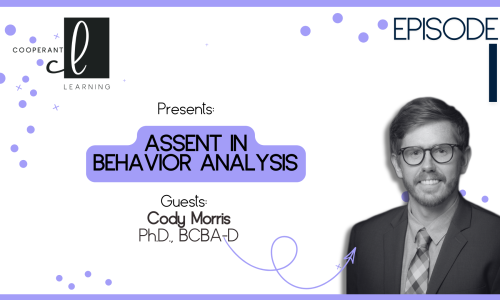
On Assent and Behavior Analysis
CEU :
ACE-Approved CEUs
Behavior Science Backed
Learn Anytime
ACE-Approved CEUs
Behavior Science Backed
Learn Anytime
How CEUs Work
Where is my certificate stored?
Lorem ipsum dolor sit amet, consectetur adipiscing elit. Ut elit tellus, luctus nec ullamcorper mattis, pulvinar dapibus leo.
Can I retake the quiz?
Lorem ipsum dolor sit amet, consectetur adipiscing elit. Ut elit tellus, luctus nec ullamcorper mattis, pulvinar dapibus leo.
Can I take the quiz anytime after making the payment?
Lorem ipsum dolor sit amet, consectetur adipiscing elit. Ut elit tellus, luctus nec ullamcorper mattis, pulvinar dapibus leo.
Start your next CEU today
Get new episodes & CEUs in your inbox